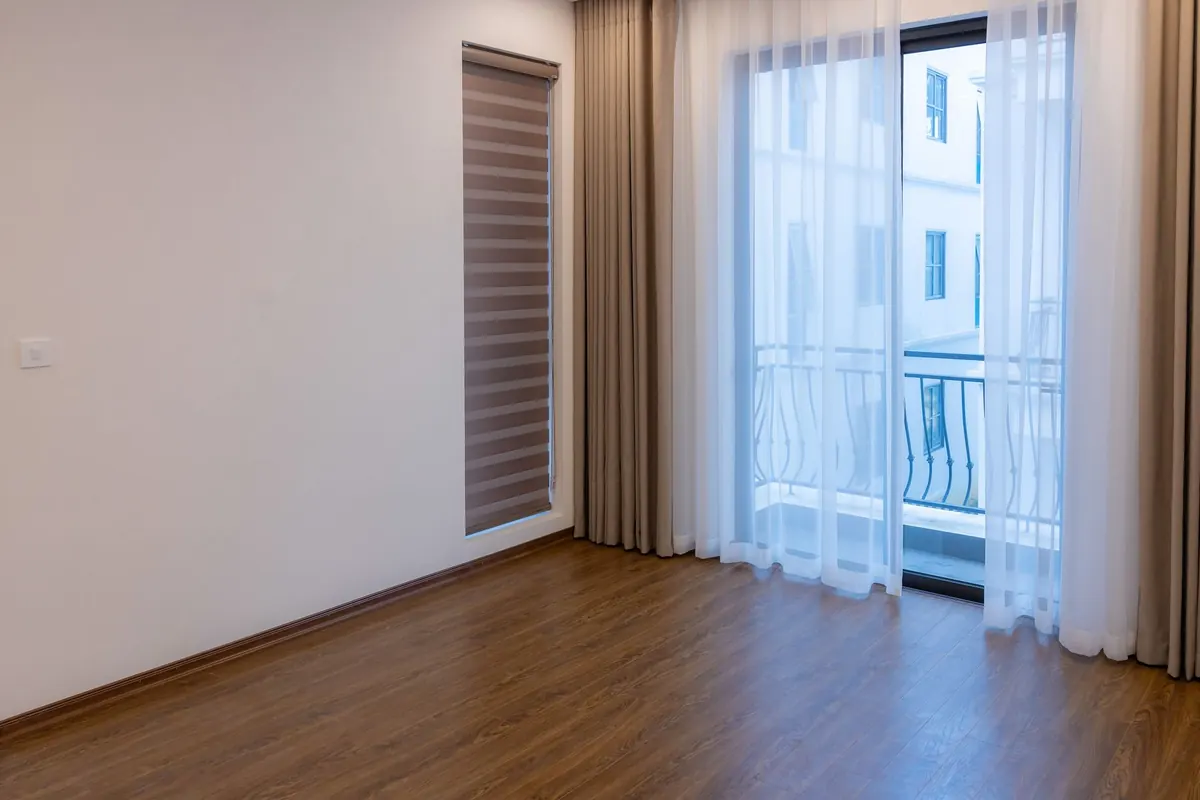
Window Cleaning for Flats and Hard-to-Reach Windows: What You Can Safely Do Yourself
Flats come with a particular set of windows: easy to see, awkward to reach. A first-floor sash you can only touch by leaning over a sill. A Juliet balcony window above a long drop. A top-floor Velux you can see from bed but not from the floor. The result is glass that has been grimy since the last time anyone bothered, and a nagging feeling that you ought to do something about it.
You can do more than you think from safely inside or from ground level. You can also hurt yourself badly by improvising. The line between the two comes down to reach, footing, and knowing when to leave the ladder where it is.
Work out what you are dealing with first
Before you buy a single thing, walk round the property and look at each window properly. Ask yourself four questions.
- Can I open it, and does it turn inwards or reverse for cleaning?
- Can I stand flat and safely below the outside face, with both feet planted?
- What sits under the window? Gravel, decking, a glass canopy, a conservatory roof, a bin store, a planted border?
- Is anything overhead? Cables, satellite dishes, balcony rails, low branches.
Then make three mental piles. The first is glass you can reach from inside. The second is glass you can reach from firm ground with a pole. The third is everything else, and that pile should stay untouched until you decide whether it is worth paying someone. Being honest at this stage saves a lot of pointless stretching.
What you can safely do from inside
If your windows are tilt-and-turn or reversible, you have the easiest job in the building. Turn the sash inwards, clean the outside face from where you are standing, then turn it back. No leaning, no pole, no risk. Do the frames and the rubber gaskets while the window is open, because that is where the black marks collect.
Standard side-hung casements are almost as straightforward. Open the window as far as it will go, reach round the frame to the outer pane, and work with a squeegee and a microfibre cloth. Keep both feet on the floor and your hips inside the room. If you find yourself lifting a heel or pressing your shoulder against the frame for balance, stop and treat that window as out of reach.
Sash windows are the awkward ones. You can lower the top sash to clean the inside of the upper pane, and the outer face of the lower sash is often just about manageable, but the outside of the upper pane generally is not. That one needs a pole or a professional.
Three things never to do: stand on the sill, stand on a chair, or remove a window restrictor to get a better angle. Restrictors exist because the drop is real, and they are also a legal requirement on many upper-floor windows in rented and communal buildings.
If you have to lean, you have already gone too far.
Poles: the tool most flat-dwellers overlook
A telescopic pole with a squeegee or microfibre head lets you clean a surprising amount of first-floor glass while keeping your feet on the pavement. The trick is control, not length. If the pole flexes so much that you cannot keep the head flat against the glass, you have gone past the useful limit, and you are now just waving a long stick at a dirty window.
Soapy water or pure water?
For panes you can see clearly, warm water with a small drop of washing-up liquid, a squeegee and a scrim or microfibre cloth to buff the edges is quick and effective. Too much detergent leaves a film, so keep it to a few drops in a bucket. For higher glass, a water-fed pole using purified water is easier: the water dries without spotting, so no squeegee required. It is slower and needs a water supply, which is why most people use it only on the awkward windows.
A few pole rules
- Work in shade if you can. Direct sun dries the glass before you finish, which leaves streaks.
- Keep any pole well clear of overhead power cables. Metal poles especially should never go anywhere near them.
- Watch for the flex point. If the pole bends more than a little, move on.
- Rinse the brush head after use. Grit in a brush turns your pole into a scratching tool.
Skip magnetic cleaners unless you know they are rated for your glass thickness. Used on the wrong glazing they can scratch, and they do nothing at all on thick or coated panes.
When to avoid ladders
UK guidance on working at height treats ladders as a last resort, suitable only for short, low-risk jobs where there is no better option. That is sensible advice for a homeowner too. Ground-floor windows are reasonable ladder territory if the ground is firm and level and the ladder is properly footed. Anything above that is where most domestic accidents happen.
Put the ladder away if the surface beneath it is decking, gravel, grass, paving with a slope, or a drain cover. Do not lean a ladder against plastic guttering, a conservatory roof, a window frame or a glass balcony panel. Do not use one in wind, and do not work alone at height with nobody around to notice if something goes wrong.
Ladders are also the wrong tool if your balance or grip is not what it was, or if you take medication that can make you dizzy. That is a conversation worth having with your GP rather than a judgement to make at the top of a rung. A fall from a first-floor window is not a small event, and no pane of glass is worth it.
When a professional is the sensible choice
Many blocks and upper-floor flats are cleaned from the ground with long water-fed poles, which means no ladders at all and no one leaning out of anything. That is usually the safest and cheapest route for the awkward pile. Call someone in if any of these apply:
- Windows above the first floor, or any window with no safe standing space below.
- Glass over a conservatory, canopy, balcony, sloping roof or glass balustrade.
- Large panes needing a pole you cannot comfortably control.
- Specialist glazing: leaded lights, Georgian bars, self-cleaning or solar-control coatings, which can be damaged by the wrong method.
- Hard water spotting or etching that has already set in.
- You have cleaned it twice and it still looks dull.
- You feel uneasy on the step, or you would be working alone.
When you get quotes, ask how they reach the windows, whether they carry insurance, and whether they clean frames and sills as part of the job. A straight answer to those three questions tells you a lot.
A realistic routine for most flats
Clean the inside faces every few weeks with a squeegee and a microfibre cloth; it takes ten minutes and makes the whole flat feel brighter. Do the outer faces of ground-floor and turn-in windows monthly if you can. Use a pole on the first floor only where you have firm footing and full control, and leave the rest alone.
Then book a professional two to four times a year for everything else, and ask them to do the frames and sills while they are there. Between visits, a rainy day will rinse more off than you would expect. Whatever you do, decide before you start which windows are genuinely out of bounds, and stick to it. That decision is the whole safety plan.
Photo: diegartenprofis / Pixabay